
There are hopes of a turnaround in overall corporate earnings after six quarters of single digit growth.

The AV Birla group flagship Grasim Industries has been an outperformer on the bourses. The company's stock price is up 56.5 per cent in the last
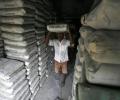
Ultratech Cement's acquisition of a 23 per cent stake in Tamil Nadu-based India Cements is another instance of growing consolidation in the cement market in India. The deal will raise Ultratech's share, based on India Cements' revenues in FY24, in the domestic market by 230 basis points if the latter is formally acquired by the former in due course. India Cements' share was up 11.5 per cent on Thursday on market expectations of an open offer.

Geopolitical developments between India and Pakistan, quarterly earnings and macro data will be the key drivers of stock markets in the holiday-shortened week, say analysts.

Quarterly earnings from corporates, global trends, and trading activity of foreign investors will guide market sentiment this week, analysts said, adding that benchmark indices may face volatile trends. "The upcoming release of Q2 results will be closely watched, providing insights into corporate performance. "Meanwhile, the escalating tensions between Israel and Iran introduce a significant geopolitical risk, potentially leading to increased oil prices and market volatility.

In June, Sensex went up 6.6% and Nifty 6.9%, their best monthly gains since December 2023.
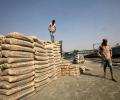
There has been a sharp slowdown in revenue and profit growth in the cement sector in recent quarters but it is yet to show in the share prices of cement companies. On the contrary, there has been a rally in cement stocks and a re-rating of their equity valuation in the past three years despite an earnings contraction during the period.

Ultratech Cement was the top gainer in the Sensex pack, spurting nearly 5 per cent, followed by Axis Bank, IndusInd Bank, HDFC, Bajaj Finserv, Infosys and Bajaj Finance.

Analysts remain selective on cement stocks amid the likely government's capex push ahead of the scheduled general elections in May 2024. While UBS has initiated coverage on the Indian cement sector with an anti-consensus negative view and suggests investors sell select cement stocks on a rally, those at Nomura remain selectively bullish on the sector and prefer companies with large brownfield optionality and multi-region presence. In the near-term, UBS expects strong earnings of cement companies in the next two quarters to be driven by robust demand and margin tailwinds, but suggests any sharp uptick in stock prices could offer a good opportunity for booking profits in the related counters.

Among the Sensex shares, Infosys rose the most by 1.37 per cent, followed by Larsen & Toubro (0.90 per cent), and Wipro (0.83 per cent). HDFC Bank, ICICI Bank, Reliance Industries, ITC, TCS, Kotak Bank, Asian Paints and Titan were among the lead gainers.

Movement in the equity market this week will largely be dictated by quarterly earnings of blue-chip firms HDFC Bank and Hindustan Unilever, along with the announcement of WPI inflation data and global trends, analysts said. Trading activity of foreign investors, global oil benchmark Brent crude and rupee-dollar trend would also guide the movement.

It also asked why the data shared pertained to a period from April 2019 even though the scheme for anonymous political funding was introduced in 2017.

From steel tycoon Lakshmi Mittal to billionaire Sunil Bharti Mittal's Airtel, Anil Agarwal's Vedanta, ITC, Mahindra and Mahindra, and a lesser-known Future Gaming and Hotel Services were among the prominent buyers of the now-scrapped electoral bonds for making political donations.
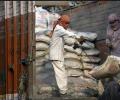
The recent price correction in broader markets has hit cement companies hard. So far in the current month, smallcap firms like Visaka Industries, Andhra Cements NCL Industries, Sahyadri Industries, and KCP have lost 19.7 per cent, 14.3 per cent, 13.8 per cent, 13.5 per cent, and 11.5 per cent, respectively. On the contrary, largecap companies, while registering losses for the month, have seen a softer blow.
On the Sensex chart, Titan, SBI, L&T, IndusInd Bank, Ultratech Cement, HDFC Bank and Asian Paints were top gainers. Sensex settled up by 380.21 points at its all-time closing high of 47,353.75. The NSE Nifty ended 123.95 points at 13,873.20.

Market capitalisation of BSE-listed companies jumped to an all-time high of over Rs 280 lakh crore on Monday as benchmark indices bounced back after taking a breather in the previous trade. The 30-share BSE benchmark gained 85.88 points or 0.14 per cent to settle at 61,308.91. During the day, it jumped 162.45 points to 61,385.48.

'The impact of CEO transition is fairly even for stocks, with about half (53 per cent) of the events not producing any change in the relative performance of the stock.'

The Q1FY24 earnings season has started on a dismal note for corporate India. The early-bird companies' revenue growth has been at a 10-quarter low, while the combined earnings of non-BFSI (banking, financial services, and insurance) companies seem to have hit the ceiling. The numbers suggest corporate India is entirely dependent on BFSI companies and the IT services sector to drive growth in revenue and profit while other sectors are showing signs of stagnation.

The stock market's momentum will be guided by the ongoing quarterly earnings season, with Reliance Industries, HUL and Bajaj Finance among those scheduled to announce their results this week, analysts said. Focus would also remain on the COVID situation, global stock markets, investment pattern of foreign institutional investors (FIIs), rupee-dollar trend and Brent crude, they added. "The earnings season would gain pace this week and participants will be closely eyeing the results of some of the top names like Reliance, Ultratech Cement, Bajaj Auto, JSW Steel, Bajaj Finance, Asian Paints, Hindustan Unilever among others. "Before that, markets will first react to the earnings of two heavyweights -- HCL Technologies and HDFC Bank in early trade on Monday," said Ajit Mishra, VP Research, Religare Broking.

The sharp correction in the Indian markets from their peak levels has made valuations attractive, say analysts, who advise buying selectively, but only from a long-term perspective. Fifty-six of the Nifty 100 stocks, according to Mahesh Nandurkar, managing director at Jefferies, now trade below the 10-year historical averages, including stocks in financial, select auto, and pharma sectors. "Valuation (one-year forward consensus price-to-earnings, PE) has declined 25 per cent from October 2021 peak, almost matching the 33 per cent price-earnings contraction during the 2011 tightening cycle when repo rates went up by 375 basis points (bps) versus 250 bps this cycle.

Investors' wealth jumped over Rs 2.95 lakh crore on Thursday, the first day of the new financial year, amid a rally in the equity market. The 30-share BSE benchmark index rallied 520.68 points or 1.05 per cent to close at 50,029.83. Driven by the bullish sentiment, the market capitalisation of BSE-listed companies rose by Rs 295,587.25 crore to reach Rs 295,587.25 crore at close of trade on Thursday. IndusInd Bank, Kotak Bank, Ultratech Cement and Bajaj Finance were the prominent gainers. In contrast, HUL, HDFC Bank, Nestle and TCS suffered losses.

The cement plants at Barmana (Bilaspur district) and Darlaghat (Solan district) had closed operations on December 14 due to the dispute between the company and truckers engaged in the carriage of cement and clinkers. According to a government statement, Chief Minister Sukhvinder Singh Sukhu said, "We have arrived at consensus, thereby protecting the interests of both the truck-operator unions and the management, besides welfare of all others who were being directly or indirectly hit by the stalemate."

Quarterly earnings and global cues will be the major sentiment driver for the equity market this week, according to analysts. Of late, Benchmark indices have been on a record-breaking run. "Quarterly results will dictate market sentiment and will be the talk of this week as they pick up the pace. "D-Street will be all ears to any management insights to forecast the future earnings trajectory.

The first quarter earnings season will dictate the trend in the equity markets in this holiday-shortened week amid absence of major macroeconomic drivers, say analysts. Besides, lacklustre global markets may increase volatility in the market, they added. Equity markets would remain closed on Wednesday for Bakri-Id.

Skylark Drones, a leading drone platform company that counts Tata Steel, Ultratech Cement, Softbank Energy among its customers has secured $3 million in a pre-series A funding round. It would use the funding to strengthen its product offerings and fuel international expansion.

Ajit Mishra, vice president, Research, Religare Broking, answers your stock market queries.

The much-talked-about sale of Ambuja Cement and ACC by Holcim Group will see the single-biggest outflow of foreign capital from the country if the two cement firms are acquired by Indian investors. The deal, valued at nearly $10.35 billion, will put in the shade Cairn Energy Plc's exit from India in 2010, when it sold Cairn India to Vedanta Group for $4.48 billion. According to various reports, big business groups such as AV Birla, JSW Group, and Adani Group are in the fray to acquire Holcim's assets in India.

On the Sensex chart, Bajaj Finance, Bajaj FinServ, SBI, IndusInd Bank, Dr Reddy's, Tech Mahindra, ITC and Kotak Bank were the prominent gainers - rising up to 7.29 per cent. NSE Nifty climbed 102.40 points to end at 15,737.75.

On the Sensex chart, IndusInd Bank, SBI, Dr Reddy's, NTPC, ICICI Bank, HCL Tech and Bajaj FinServ emerged as major laggards.

SFIO, the investigation arm of the Corporate Affairs Ministry, has been ordered to probe alleged fraud in 83 companies in the last four years, Parliament was informed on Thursday.
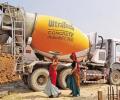
India's largest cement firm, Ultratech Cement, has joined the race to acquire the Holcim stake in Ambuja Cements and its subsidiary, ACC. UltraTech - part of the Aditya Birla Group - submitted a non-binding bid on Wednesday. Swiss multinational Holcim, which manufactures building material, is exiting India by selling its 63.19% stake in Ambuja Cements. According to banking sources, UltraTech has submitted a plan to Holcim, outlining divestiture details that would meet the norms set by anti-trust body Competition Commission of India.

Indian companies had raised $2.39 billion from foreign markets in May 2015.

The possible acquisition of Holcim India business will be one of the biggest inbound corporate deals in the country. Currently, Walmart Inc.'s $16-billion acquisition of Flipkart Online Services in 2018 remains the biggest acquisition of an Indian asset by any acquirer, followed by BP plc acquisition of 30 per cent stake in Reliance Industries' 23 oil and gas production blocks in 2011 for $7.2 billion. Bloomberg reported late on Wednesday night that Holcim - the world's biggest cement maker - is considering a potential sale of its India business and gauging interest in its controlling stake in Ambuja Cement.

Tesla Inc chief Elon Musk is set to acquire micro-blogging site Twitter for about $44 billion. Back home, India Inc, too, is seeing aggressive merger and acquisition (M&A) activity with PVR-Inox and HDFC-HDFC Bank announcing their mergers recently. While Axis Bank recently acquired Citi India's India retail business, reports suggest Larsen & Toubro Infotech (LTI) and Mindtree could be eyeing a merger.
In a circular dated May 20, Sebi had directed the listed companies to evaluate the impact of Covid-19 on their capital and financial resources, profitability, liquidity position, assets, and ability to service debt. Instead, companies have spoken about the number of plants, warehouses and distribution centres that have resumed operations; work-from-home and safety measures undertaken for employees; and the labour shortage they are facing.

As the demolition date of Supertech twin towers in Noida, Uttar Pradesh, inches closer, the company entrusted with the tricky task is putting the finishing touches to its preparations.
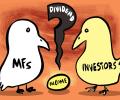
The combined dividend payout by early-bird companies -- those that have declared their results for FY21 -- is up 8.9 per cent, lower than the 21.9 per cent rise in in FY20 but ahead of the underlying growth in India Inc business last year. Combined net sales of these early birds were down 1.8 per cent last financial year while net profit was up 27.3 per cent in FY21. Some top companies that have stepped up dividend payout in FY21 include Hindustan Unilever, Indus Towers, Tata Steel, Ultratech Cement, Larsen & Toubro, Dabur, Asian Paints, and UPL. In contrast, banks have skipped dividends under an RBI diktat while companies such as Marico, TCS, Maruti Suzuki, and Godrej Consumer are paying lower dividends for FY21.

Top companies have grabbed a bigger pie of their sectors in the pandemic period, leading to a further rise in market concentration in many industries as measured by the Herfindahl-Hirschman Index (HHI). The HHI score, which indicates competitive intensity in an industry (or a lack of it), reached a new high in FY21 as bigger firms raised their revenue market shares either organically or through mergers and acquisitions. A higher HHI score indicates a rise in market concentration in favour of a few firms while a lower score means that the industry's revenue is more evenly divided among many companies

FII investments, movement of rupee against dollar and crude oil to influence trading

Ajit Mishra, vice president, Research, Religare Broking, answers your queries
